The most economical way to keep longarm quilting services costs down is to do a lot of the auxiliary work yourself such as backing prep, trimming, and binding. But that isn’t the only way to save. Some of the savings can also come from employing good quilting technique during the quilt construction process and quilting prep. Here are some things to watch out for when prepping to have your quilt top finished by a longarm quilter.
1) Prep your backing fabric. Here’s a secret, this can be easy when you opt to not square it!!
What size batting and backing do I need for my quilt top?
Below is an example of how to determine what size batting and backing you need using a quilt top size of 50” wide X 60” high
Quilt Top: Measure Width and Height
Width = North to South
Height = West to East
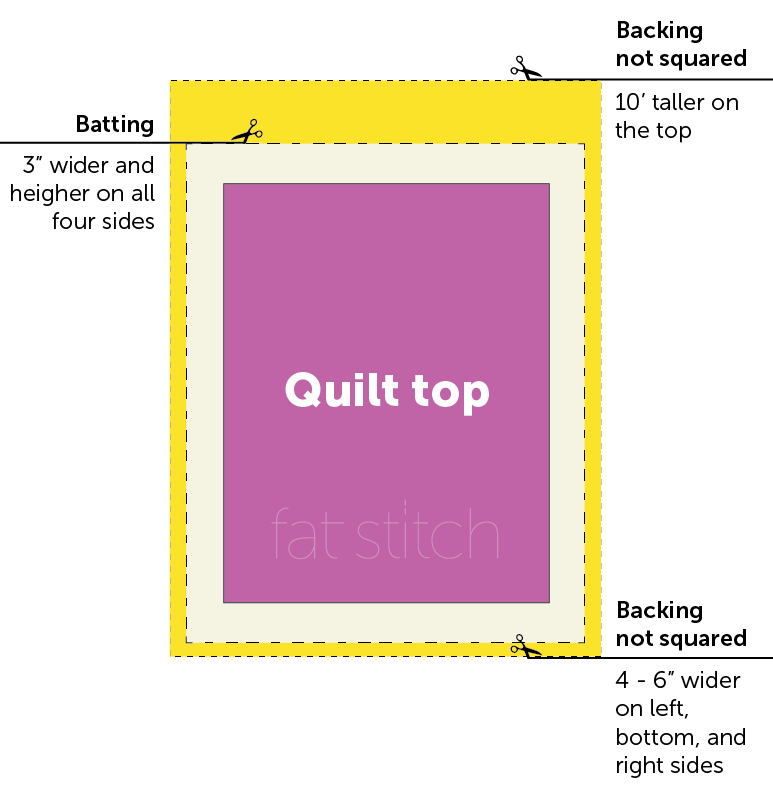

Batting: Add 6” to width and height so in this example the total needed would be 56” x 66”
Backing not squared: (Recommended): Add 8” to 12″ to the quilt top width and 14″ to the quilt top height so in this example the backing would be a minimum size of 58” x 74”
Squared backing: Add 8” or more inches to the quilt top width and height so in this example the backing would be a minimum size of 58” x 68”
Tip: Leave selvages on! More is better and therefore it’s ok to provide backing that’s way taller than needed. We will simply roll it up on the backing bar and return any unused backing to you. Selvages also help ensure the back is perfectly straight.
What does it mean to square my backing for my quilt top?
Squared backing is when the fabric is measured and perfectly squared with four 90 degree corners in prep for the longarm. This can be labor intensive unless you use the ripping method from selvage to selvage and therefore not recommended unless you know how and don’t mind the effort.
What if I don’t have wide back backing fabric?
That is ok! You can simply sew two lengths of regular sized fabric together. Be sure to make all backing seams horizontal (West to East).
Does Fat Stitch carry backing?
Yes we do! We carry a large selection here of backing including quilting cotton, muslin, peppered cotton, and flannel.
Do I have to iron my quilt top before providing to the longarm quilter?
This really depends. If you were ironing your quilt top seams as you went along during the quilt construction process, then there really isn’t a need to re-iron it. The rule of thumb is to make sure your seams are flat(ish) and there are no deep wrinkles that will struggle laying flat. One way to test this is to lay your quilt top across a bed to see if it lays flat. If there is a lot of fullness you can mist it with water to see if it will lie flat. Be sure your quilt top is completely dry before packaging up for your longarm quilter. Your longarmer can also gently mist problem areas on the longarm quilting machine frame to help.
Do I have to iron by backing before providing to the longarm quilter?
With Innova longarm quilting machines, we get very good tension for the back of our quilts. This makes ironing backing fabric not needed unless there are deep wrinkles is common with wide back fabric cut from the bolt. The best way to combat this is to iron out problem spots before passing the material to your longarm quilter. Alternatively, she can iron your backing for you which will likely incur a fee, or gently mist the wrinkle at no cost. The downside of misting the wrinkle is that it tightens the tension where ever the fabric got wet. Your quilt will still stitch out nicely but if you concerned with having perfectly even tension on your backing, it is best to treat the whole backing uniformly. However it’s debatable whether there is any difference to the outcome so in most cases, a gentle spray of water works fine. TIP for longarm quilters: Beware of fabrics that bleed when misting with water. For fabrics that may potentially bleed, be sure to let each area dry before advancing the quilt.
What’s the best way to piece backing fabric:
In the example of a 50″ x 60″ quilt top you would cut two 58″ pieces off the bolt and sew them together along the selvage. Depending on the fabric I recommend sewing 1″ from the edge of the selvage, then trimming of the selvage leaving a minimum of 1/2″ seam allowance. TIP: Iron seam to one side to help it lay flat. 1/4″ seams have more trouble laying flat so you will have a cleaner look with a bigger seam allowance. 1″ also works nicely.
Now you will be left with one piece that is 58″ wide X 86″ tall. We recommend that you do not cut the height down to size and instead send us the oversized backing. We will return your excess backing to you with your finished quilt.
What are the benefits of having a backing wider than 4″ on the sides?
Depending on the quality of your fabric, having more width provides better stabilization and tension.
TIP: Send us in a couple of 4 x 6 pieces of scrap fabric you used to piece the quilt top to help your longarm quilter test the stitches on your specific fabric before getting started.
Do quilt backing seams need to run North to South or East to West for longarming?
Backing fabric seams should ALWAYS run horizontal (West to East) when loaded on the longarm quilting frame. This will insure you have consistent tension for each quilting rows.
TIP: Avoid vertical backing seams!!! If you have a vertical seam, experienced longarm quilters will try to rotate the quilt to load it sideways to accommodate. This doesn’t always work however depending on the quilting technique and patterns selected so it’s best to avoid vertical backing seams as a general rule.
What if my quilt backing is not big enough?
If the backing is not large enough to accommodate your quilt top your longarm quilter can sew on a leader. A leader is a strip of fabric that is cut to the same width as your quilt top by however tall that is needed. Being that there is cutting, piecing, and measuring involved, there will likely be a fee of approximately $20 per leader + any associated fabric costs needed. This is why it is always a good to provide an adequate amount of backing.
2) Clean up loose threads
Does the back of your quilt top look like spaghetti? Does the top of your quilt have a lot of loose threads everywhere?
If so, this needs to be addressed before it can be quilted by trimming away all the loose threads. This can get costly if you are charged for the time it takes to clean it up by your longarm quilter. One of the best ways you can help your longarmer prepare your quilt top is by removing all excess threads, lint, hairs, etc from both the quilt top and back, and your backing.
What causes my quilt seams to fray?
The simple answer is cheap fabric. It is a false economy to buy bottom-of-the-barrel fabric from Walmart, Amazon Etsy, Michaels, Hobby Lobby, Joann’s (RIP), etc. These stores are prone to carrying knock-off brands and/or low quality options. If you don’t believe quality is a priority, ask your self in three years time, if my quilt starts to unravel, will I wish I had spent the extra $10-$20 for quality fabric? Is it really worth buying “on-the-cheap” if it doesn’t last?
This is why professional longarmer quilters strongly advise buying quilt fabric from reputable quilt shops that carry genuine brands whether brick and mortar or online.
Having cheap fabric can also increase your longarming costs or at a minimum, cause your longarmer aggravation due to all the extra work this creates for her in having to trim all the erroneous threads.
3) Avoid fullness and wavy borders during the quilt top construction process
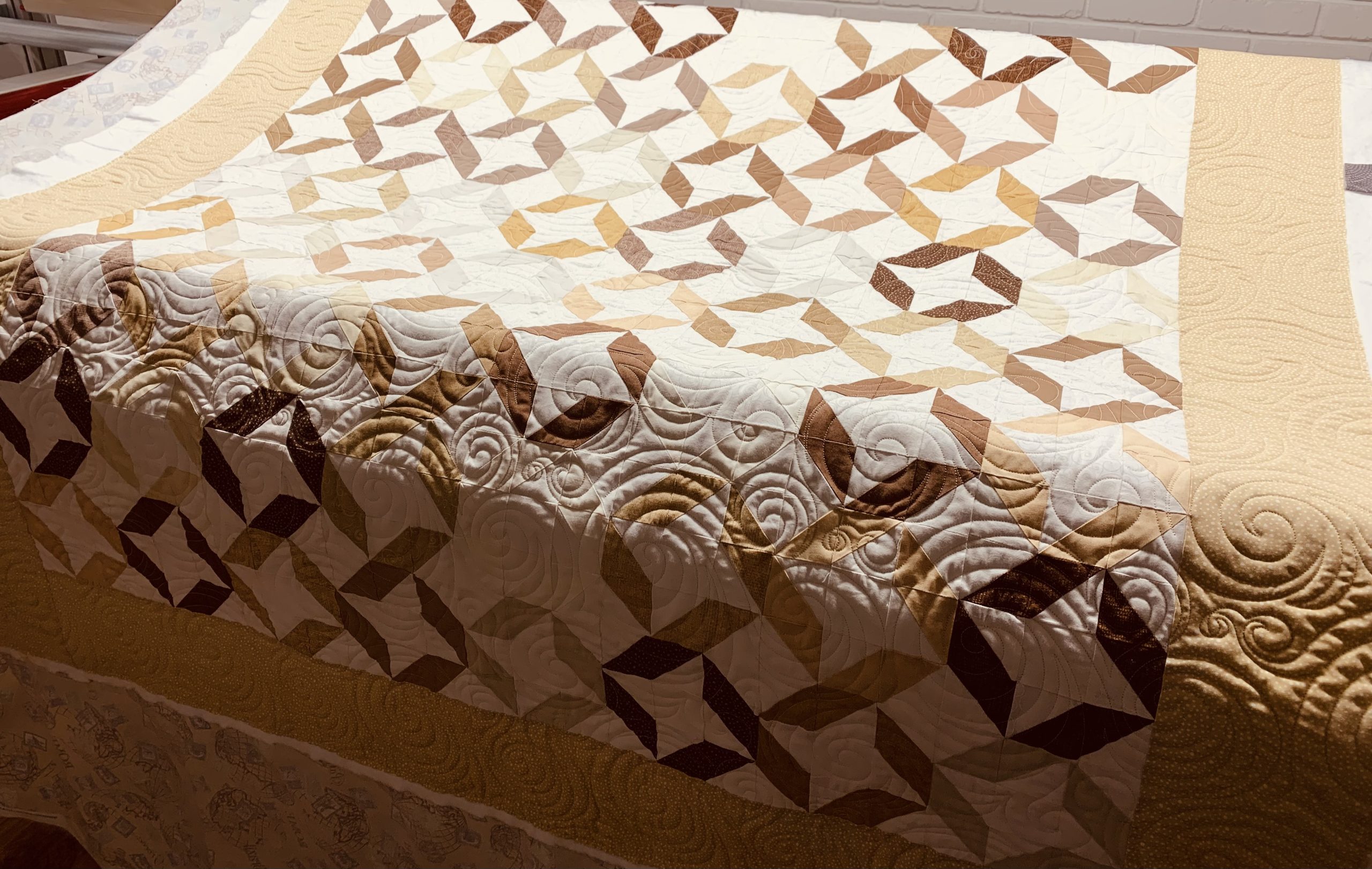
When working on patters that have fabric cut on the bias be sure to either piece them right way, or sew a 1.8 inch stay stitch an 1/8th of an inch from the bias edge to prevent it from from EXPANDING!! Yes fabric on the bias stretches, a lot. And with a pattern that uses a lot of bias cuts runs the risk of adding excess amounts of fullness across the entire quilt top. This is caused by a lot of handling of the cut fabric shapes over time. By taking a page out of the apparel construction book, you can preserve the intended shape of your cut without worry of it distorting. Below is an example of a problematic quilt pattern.

TIP: If stay stitches were not used when using a pattern with a lot of bias cuts or your quilt does not lay perfectly flat they way you intend it, ask your longarm quilter to apply the borders directly onto the frame to avoid the dreaded wavy borders.
TIP: For UFO projects stored in their block form such as the Pineapple block, a good rule of thumb is to check to see if it is still square before piecing. Fixes can include ironing the blocks to see if they go back into shape followed by re-squaring the finished block before piecing to ensure correct measurements. This will ensure your quilt lays flat for smooth longarm quilting.
What does it mean to cut on the bias?
Cutting on the bias is when you cut your fabric diagonally to the selvages of the fabric (top and bottom of the bolt), otherwise known as the weft and warp directions of the fabric treads. The bias has a stretch to it and some fabrics are more prone to getting stretched out of shape than others. This is the majority of quilters prefer quality quilting cotton for its quilting stability.
Batiks, as beautiful as they are, are one of the biggest offenders of stretching. TIP: When quilting with cotton Batiks, AWAYS stay stitch your bias edges. When using batiks on quilt borders, consider having your longarmer sew these on on for you directly on the longarm machine frame to avoid wavy borders.
What is a wavy border and why is it problematic?
Wavy borders are just that, wavy, making them hard to quilt. Can you imaging trying to quilt ruffles to look flat without it pleating? That is sometimes what it’s like trying to address wavy borders. There are techniques a longarm quilter can use to try to “quilt it out” but this process can be very time consuming as well as a back-buster. The last problem quilt I fixed took me 18 hours of slowly easing in the fullness across the entire quilt for every stitch!! The borders were the hardest to fix and required nothing short of wizardry and tears to complete.
Techniques longarm quilters use to address fullness and wavy borders:
- Mist the fabric with water to tighten up the fibers
- Use a denser pattern to pull in the fabric more
- Stand over quilt and ease in problem areas
- Maintain good tension on all for sides of the quilt bed of the longarm machine
- For extreme wavy borders, the best solution is to remove the borders and have the longarmer add them back on directly on the longarm quilting frame.
The good news is that mild fullness can be put right and you will likely never hear a peep from your longarm quilter that there were any issues. A little bit is normal and not an issue for the experienced quilter.
The bad news is that quilts with excessive fullness can take 5-10X the amount of time to quilt. This means either the longarm quilter is working those extra 5-12 hours for free, or the customer will be charged an hourly rate. Rates depend on the individual policy of the longarmer so best to check with them to see how they handle issues. One thing to keep in mind is that longarmers’ schedules book up so you want to be sure you don’t get dropped from the rotation if you consistently provide quilts with a lot of fullness. At Fat Stitch we address problems on a case-by-case basis and to date have eaten most of that time to keep costs down for the customer. Luckily we rarely come across extreme cases.
4) Ask questions–a longarm quilter is your quilting partner
Your friendly trusted longarm quilter will advise you on the best way to prep your quilt to save you on your machine quilting costs, and ultimately share tips and tricks to help you on your quilting journey.
5) Opt for Edge-to-Edge quilting pattern
Custom quilting jobs look great, but they are labor intensive and take a lot more time to complete. Even adding digital quilting borders makes the job take 4-5 times longer with additional planning, pattern editing, and thread burying. Edge-to-edge digital quilting patters are a very economical way to get your quilt project completed and to significantly reduce costs. The pattern options are endless. At Fat Stitch we spend a lot of time on each project hunting for just the right pattern to accompany the theme of your quilt for the best outcome, even if that means buying new patterns on our dime.
6) Choose who does the quilt finishing
Other ways to save money after the quilting is completed is to trim the quilt yourself and bind it. Trimming is also referred to as squaring your quilt. This is an important part of the prep needed for binding. The longarm quilter can do this for you, or you can opt to do it yourself at home.
Binding almost doubles the costs of quilting. By binding the quilt yourself, you will cut down costs considerably. On the other hand, many quilters abhor binding and prefer to have it done by their longarm quilter. There is no right or wrong approach, only what’s right for you!
For quilts that were stitched with a border and B2B pattern or hand-guided (FMQ) can have upwards of 10 – 30+ threads to bury. You can talk to your longarm quilter about using the back-tack method instead, opt to bury the threads yourself, or pay her for this service.
Can I supply my own batting?
Here at Fat Stitch longarm quilting in Concord, CA, we prefer that you use the batting we carry. We have researched high and low to find you the best quality batting by reputable U.S. Manufacturers offering 100% natural batting free of toxic fillers, resins, and scrims. Also logistically storing and tracking bulky batting for every customer would get cumbersome and problematic. We store our batting on the roll in a clean environment giving you the best options for your creations.
Learn more about Fat Stitch Longarm quilting services and get an estimate on your next quilting project.
Read blog on Understanding Longarm Quilting where we dive deeper into what is longarm quilting and the benefits of working with a longarm quilter.
Call/text for more information on our services at 925-504-9490 or e-mail us at hello@fatstitch.com
Fat Stitch is a family-owned online quilt shop located in Concord, California, USA–offering genuine high quality quilting supplies and professional longarm quilting services.